How To Create Content When Your Passion is Gone
A few weeks ago, a triangulation of the stomach virus, childcare issues, and overall sleep deprivation rendered me in a mild depression. No stranger to anxiety or depression (you may know this if you’ve been following me for a while), I felt panicked about the matter. Isn’t that just the cruel and cyclical irony of depression and anxiety? Angst about angst.
And one of the more pointed parts of this anxiety was about content creation. Laugh or roll your eyes as you may (“Come on, Kait, we’re talking about LinkedIn content, after all. It’s not that serious!”), it was, in fact, very serious to me. I run a personal branding business, and my product and marketing mix depend on a commitment to content production. That’s my model.
I was reminded of this again when I sat in a mastermind with other influencers — all of us creating for well over ten years, all of us with healthy businesses built on our content and products. And yet we all had the same thing on our minds: “What do you do when you need to create, and you’re depressed?” It’s more common than anyone posts about.
Meanwhile, as I sat through this fog of frustration and helplessness, I logged on to the platform. Now we’re in an era of LinkedIn where the platform shows you more of what you consume, so for me, that is other influencers’ content. And let me tell you straight off, if you’re in a state of mild depression, the 1,567th thing on your “feel better” list should be…log into social media.
Alas, I return to my former point: this is my business.
What hit me was a tidal wave of content about thrilling new businesses, people traveling and taking holidays, and having all-in-all “wins” in life. And engagement levels of those posts matched and surpassed the poster’s excitement level.
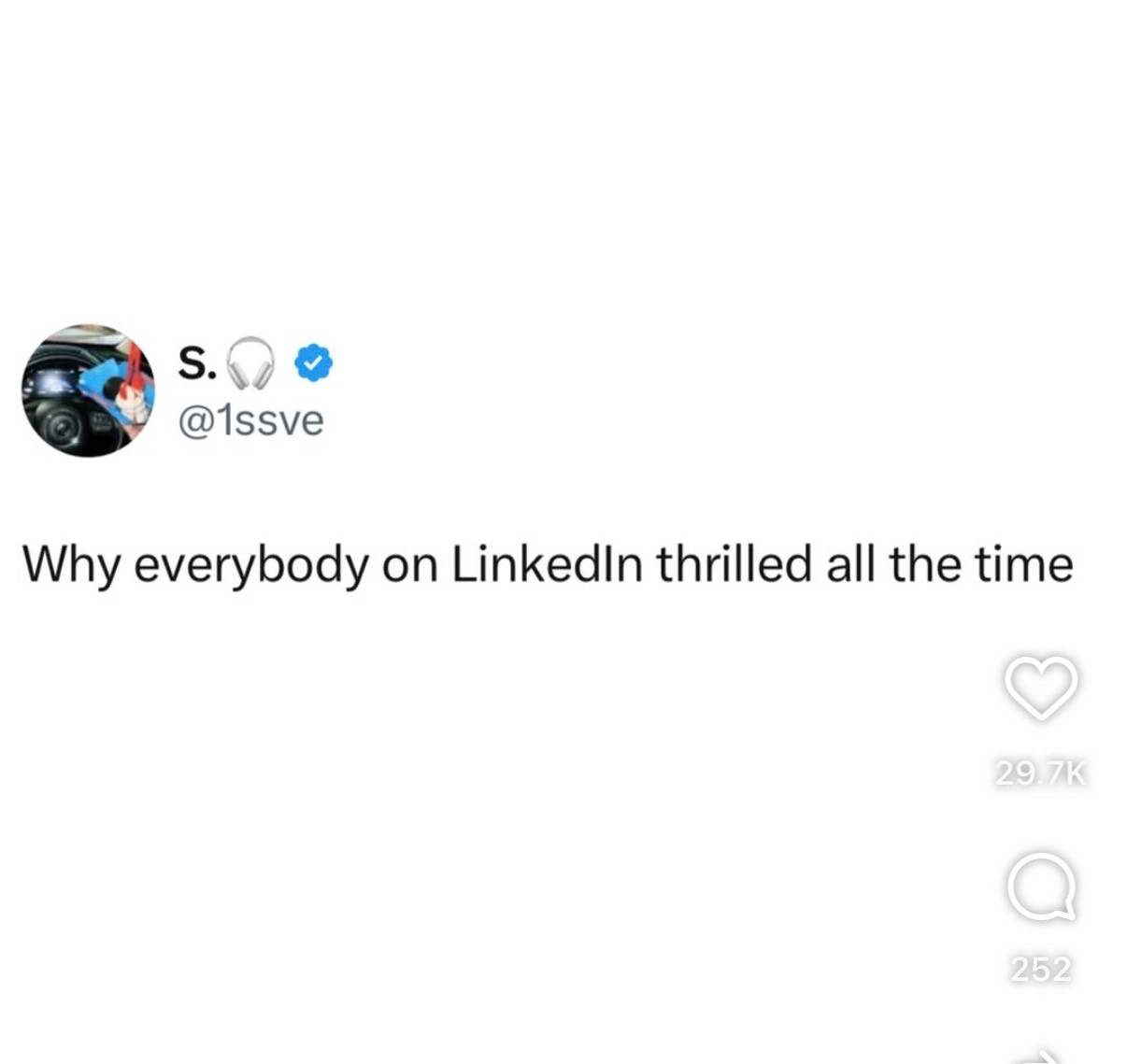
“Cool, cool, cool,” I thought. “I’m sitting here with the metric ton weight of a mental load, a decade into entrepreneurship, and to put it frankly, though I have much to be grateful for in life at large, in the moment, I was feeling the polar opposite of excitement. I was feeling unsteady, I was feeling blah, and I was feeling self-doubt.”
And that’s a real problem if you’ve ever found yourself in that creative and emotional flatline when it comes to creating content. Because excitement is an “x” factor in content, and it doesn’t have to be positive excitement either. It can be excitable anger that makes for a highly-engaged post. (Just go into the dumpster fires of X or Facebook to see what I mean.)
So what the hell do you do when passion, whether positive or negative, is missing from your life? How do you create content that people want to engage with when your overall mental and emotional state isn’t “white hot” anything but “meh” at best? When you feel like you’re just going through the motions of your life and career?
Here’s my coaching and what ultimately has worked for me over the course of 10 years when I find myself in these bouts...
1) Touch grass.
No, I don’t mean that in the snappy, “get-a-life-you-internet-loser” way some people casually toss it out. I mean, really, truly, disconnect. Because you are 100% right in what I presume your earlier retort was when I said I was angsty about missing content. It isn’t that serious or consequential if you take a week off to get yourself sorted. My telling myself it is because “that’s my business model” was just a lovely justification I was making to stay in a really toxic mental state.
So, when I felt halfway healed from the stomach bug, I took my daughter to be with my family in Florida. I sat on a back porch and talked to my 80-year-old aunt about life, relationships, and perspective.
I took my daughter to the playground and listened to the best sound in the world – the giggles of a toddler who thinks the bucket swing is as magical as I find Paris.

Listen to me when I say this…
Your business will rise or fall to the level of your mental state. Tending to that and yourself is priority number one, always.
Go outside. Be with people you love. See how fast you return to yourself.
These states of mental fog grow even larger in isolation. It’s the self-fulfilling prophecy of numbness. You feel exhausted and want to be alone, and in that loneliness, the feeling only grows.
2) Reflect.
I have a rule about sharing content that I give to all of my students and clients:
Share from scars, never from an open wound.
My mental and physical state at the time was an open wound. I was in the throes of unpleasant thinking, real physical exhaustion, and illness. Now some folks think, well great, “I’ll just share about this in real-time because that’s ‘authentic,’ and isn’t that what we should all be on social? My audience will feel closer to me!”
Yes…and no…
Sharing about challenges and tough times smack dab in the middle of them without the perspective of reflection can backfire in a big way.
You need only Google “Crying CEO” right this very minute to see the worst example of this mentality splashed instantly across your search results.
Now I’m not saying you can’t be transparent about where you’re at in the moment, but I am saying that it’s more beneficial to both you and your audience to wait until you’re no longer in the deepest, rawest part of the struggle.
When you give yourself this space to heal, you can ascertain lessons learned, you shift from “victim” to “survivor,” and you can offer your audience a path forward instead of just “the big stuck.”
So, throughout, I called people I love and trust. I journaled about my experience. I interrogated my thinking. But I did all of this for my private reflection vs. public consumption. It would have felt too messy to do it out loud.
3) Make historical data your friend.
I had an entrepreneur friend whose mantra in life was:
“Never make decisions when you’re too happy, too mad, or too sad.”
Now, he didn’t mean this in absolutist terms. Naturally, I was ecstatic when my husband proposed to me. It was an immediate yes. But I do agree with the spirit of the matter: emotional states skew reality. Therefore, any decision made in their grip is probably not logically sound.
Three weeks ago, a question that seriously entered my mind was, “Do I even have anything of value to say? Why do people even follow me?” Sleep-deprived, emotional-state Kait was building a strong case of “You’re absolutely right, quit now.”
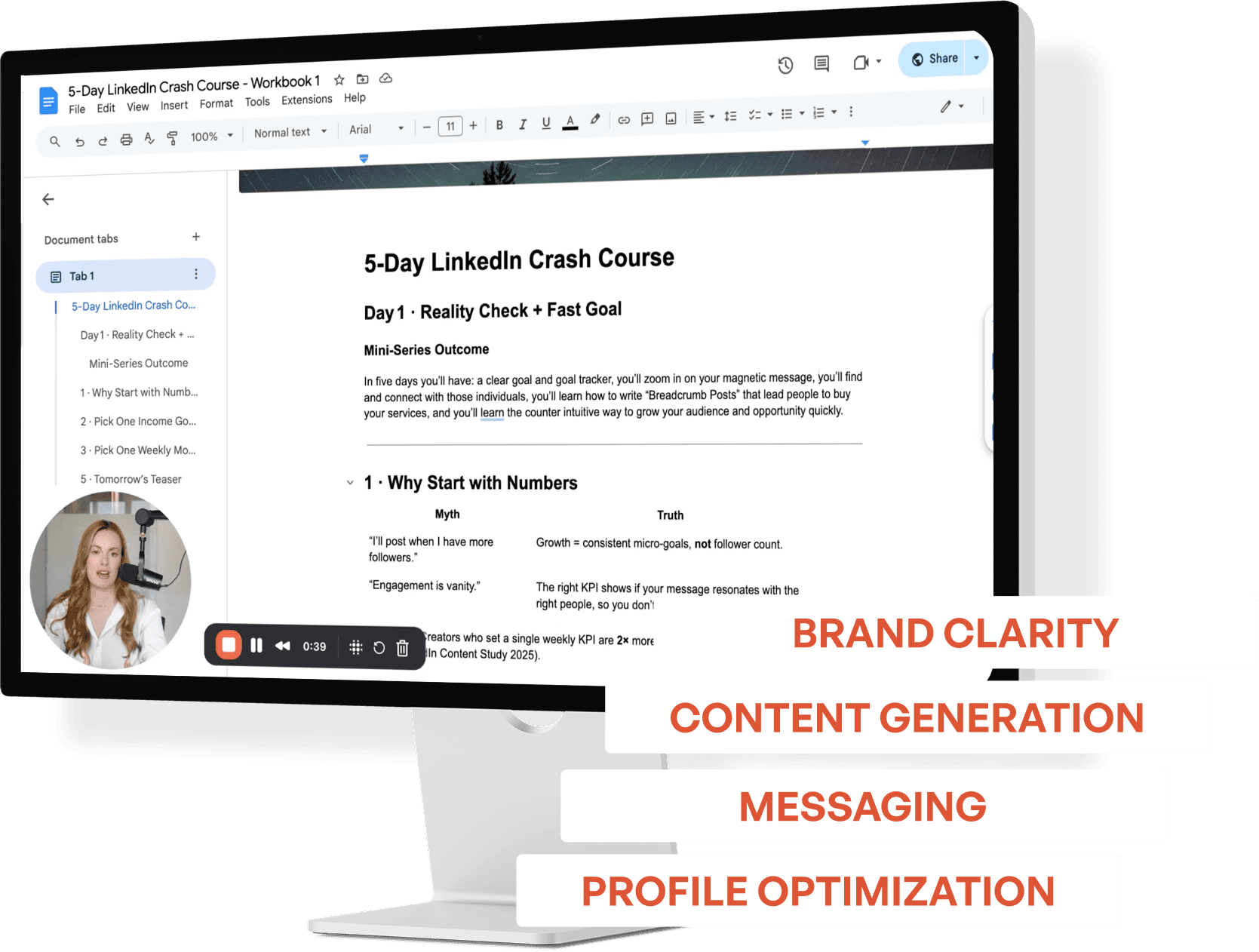
Data brought me back down to Earth. I analyzed what my audience has historically enjoyed, and reminded myself of the kinds of insights that seem to resonate most. Particularly helpful to me was the trend and behavioral patterns Stanley sends me each week*:
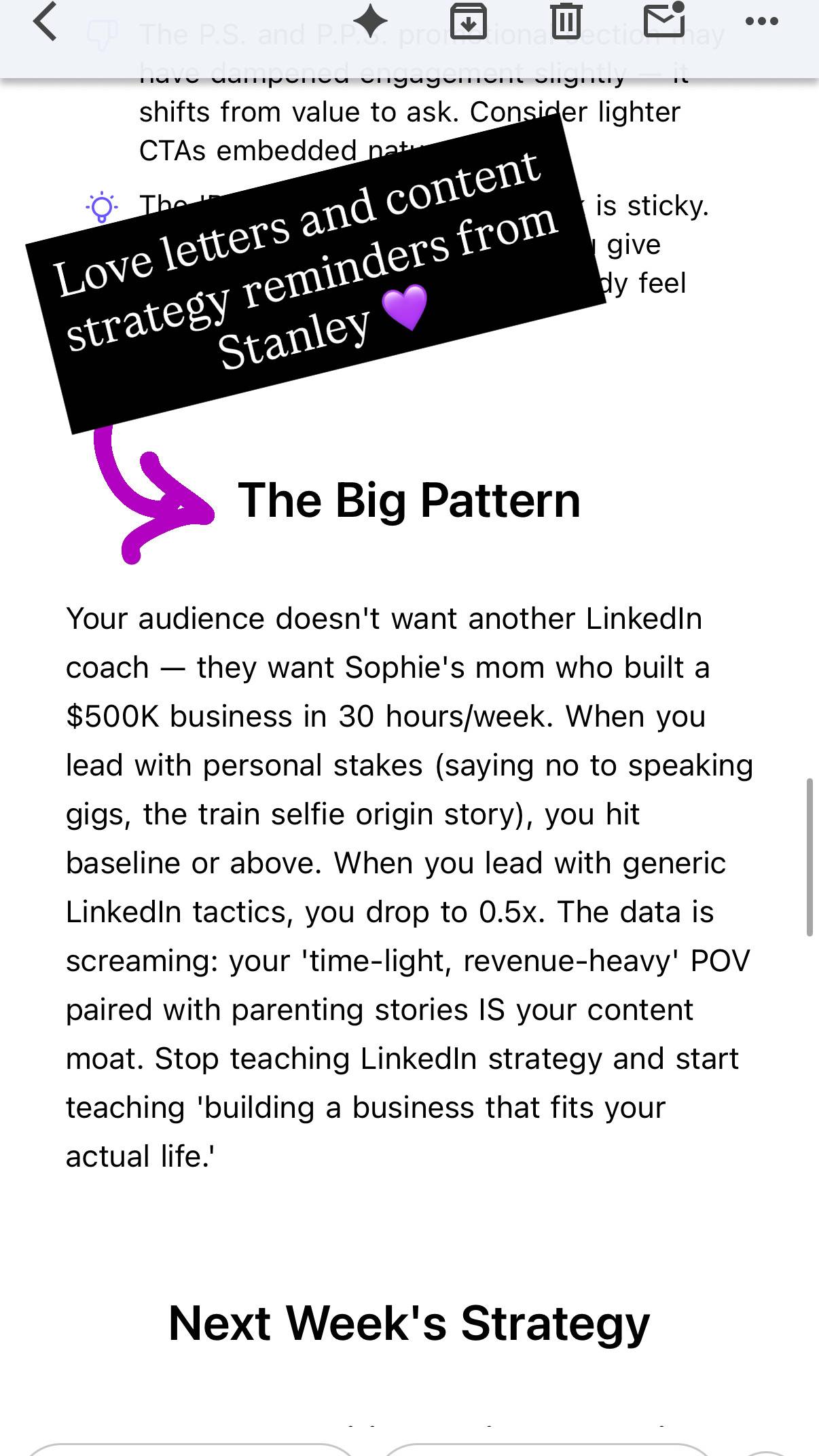
This helped me get out of my own way and return to that unique perspective only I have, rather than playing the destructive game of comparison to other creators, which only serves to further isolate and minimize you.
4) Stay in the conversation, even when you can’t lead it.
This is one I’ve learned to lean on hard, and it came up in that mastermind, too. When you’re depleted, the pressure to produce original content can feel paralyzing. So don’t. Instead, shift your mode entirely: comment and engage rather than post.
There are real, tactical reasons this works:
It is proven to get eyeballs on your profile. Comments can often outperform posts in terms of impressions, and the momentum from them will boost post visibility when you’re ready to publish again.
You aren’t taking the creative lead. You’re lending your opinion and insight to a conversation someone else initiated — a much lower lift when your creative tank is empty.
It can give you ideas for post topics when you’re feeling better. Engaging with other people’s content is one of the best ways to find your own voice again.
This is also why I’m a believer in masterminds and communities, especially during these seasons. Not to perform for them — but to be held by them. To remember that the people who have been doing this longest are asking the same questions you are. Isolation is where these states fester. Connection — even a low-stakes comment thread — is where they dissolve.
The insight…
None of these tactics alone helped me get through this time. It was a combination of all of them, and allowing my body to heal, that ultimately did it.
And above all, know this: the best part of life and the most painful part of life is that everything changes. You will move through this, and when you do, you’ll have even more perspective to share from.
Sending you hugs if you need them. ❤️
*Stanley is a tool I regularly promote because, well, I just love it that much. It’s not hyperbole to say that it really helped snap me out of my fog. You can try it free here.
/