Read Time: 8 minutes
Steal My 30-Day LinkedIn Content Plan That Converts
“It was the best of times, it was the worst of times, it was the age of wisdom, it was the age of foolishness, it was the epoch of belief, it was the epoch of incredulity, it was the season of light, it was the season of darkness, it was the spring of hope, it was the winter of despair.” — Charles Dickens writing about the 2025 LinkedIn feed
Wow, he was ahead of his time.
Alright fine, he was talking about London and Paris.
But it’s fitting for the moment, because here we are in summer 2025, with a tale of two LinkedIns. The LinkedIn feed that it’s product development team and editorial team say the algorithm values, and then the LinkedIn content that we all still see going viral (thanks ai bros).
Here’s a post and comment that kind of sums up all this mixed messaging:
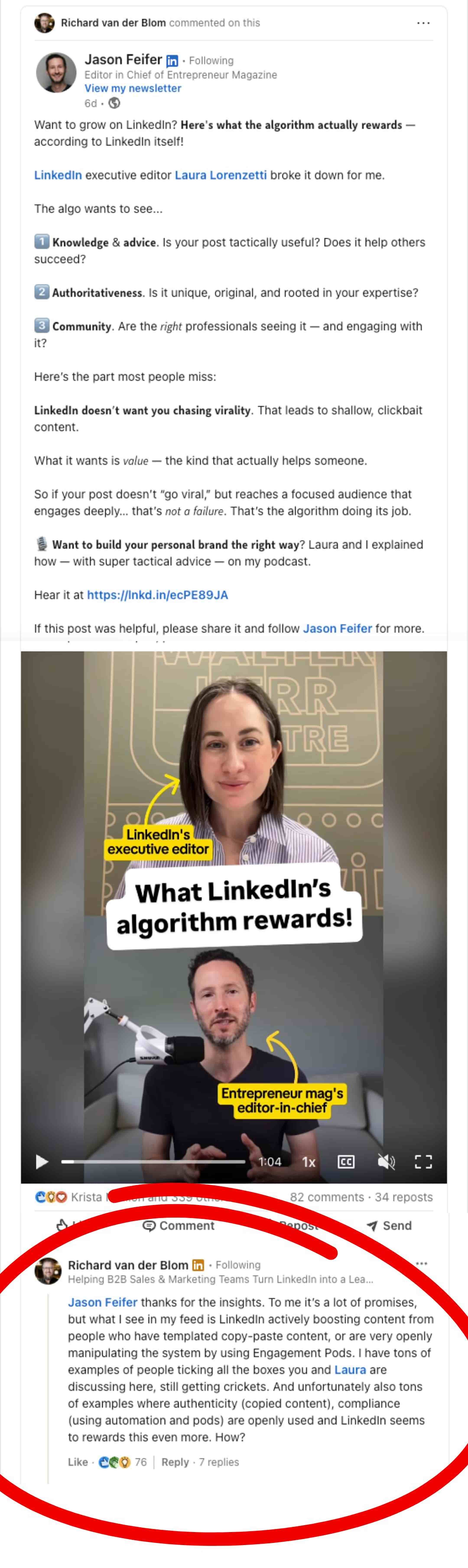
So, in a world where LinkedIn’s new algorithm supposedly rewards content that sparks thoughtful dialogue and keeps readers scrolling for longer periods by looking if posts are unique, original, and tactically useful… check these boxes (As Jason wrote above).
…And a simultaneous world where every fourth post seems to be “How to Use Chat GPT to Gain 56,000 followers in 2 minutes,” it begs the question,
💡 “How the hell do smart, experienced professionals actually make strides here?”
No fear, dear reader.
Below is a four-week roadmap—two posts per week—that meets the LinkedIn algo’s criteria, increases “time on post,” is uniquely human, and bonus, respects the limited bandwidth of a working professional and mere mortal. Each week focuses on a single strategic objective, and each post is designed to keep readers on-page long enough to trigger the dwell-time signal LinkedIn now favors.
Week 1 — Reintroduce Yourself and Reset the Story
Start by assuming most of your audience has no idea who you are. Even loyal followers miss posts.
Post 1:
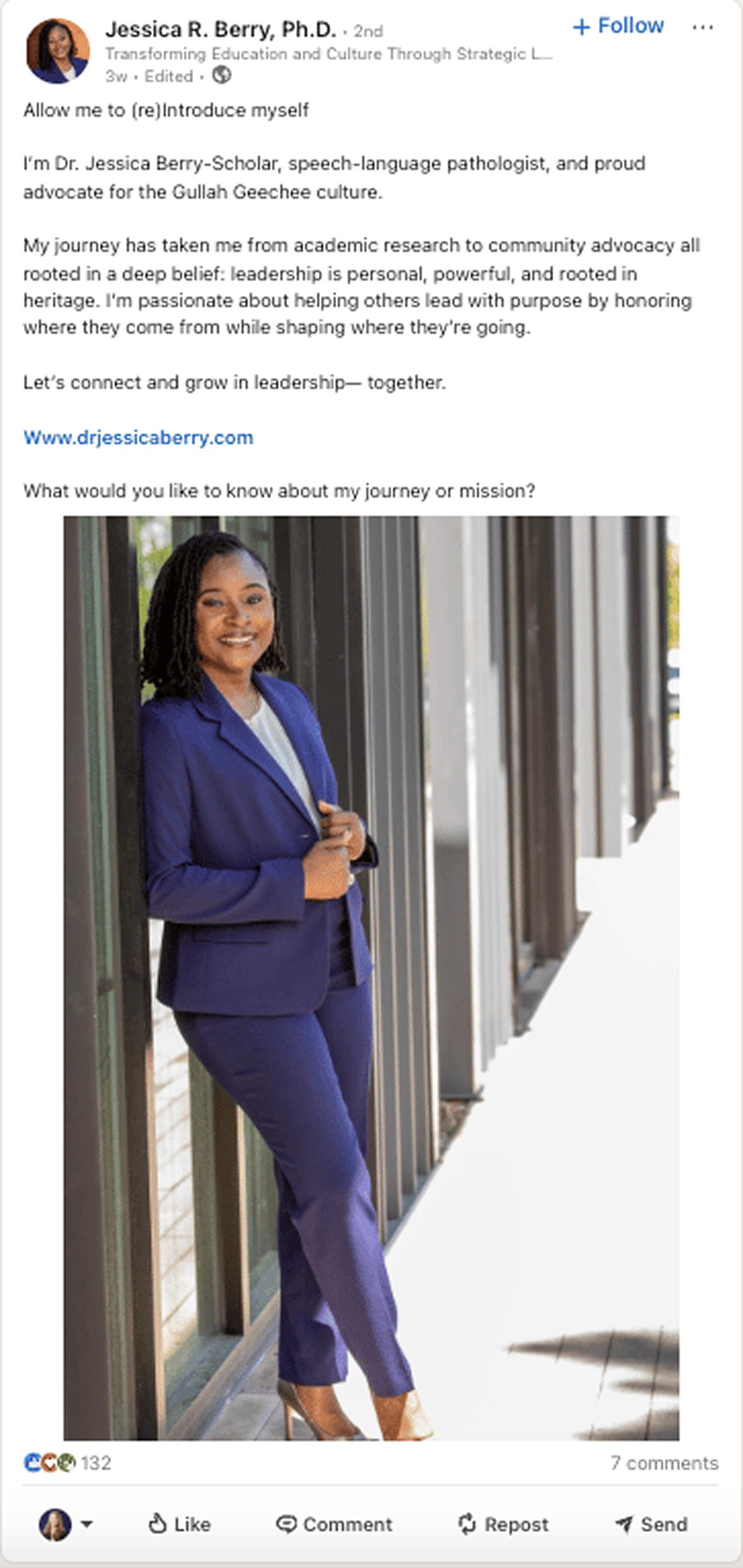
Craft a concise personal introduction that features your current role, the problem you solve, and one unexpected detail that humanizes you.
Post 2:
Share a five-year timeline of key career milestones, pairing each milestone with a short lesson learned. People love linear narratives because they can trace the transformation step by step.
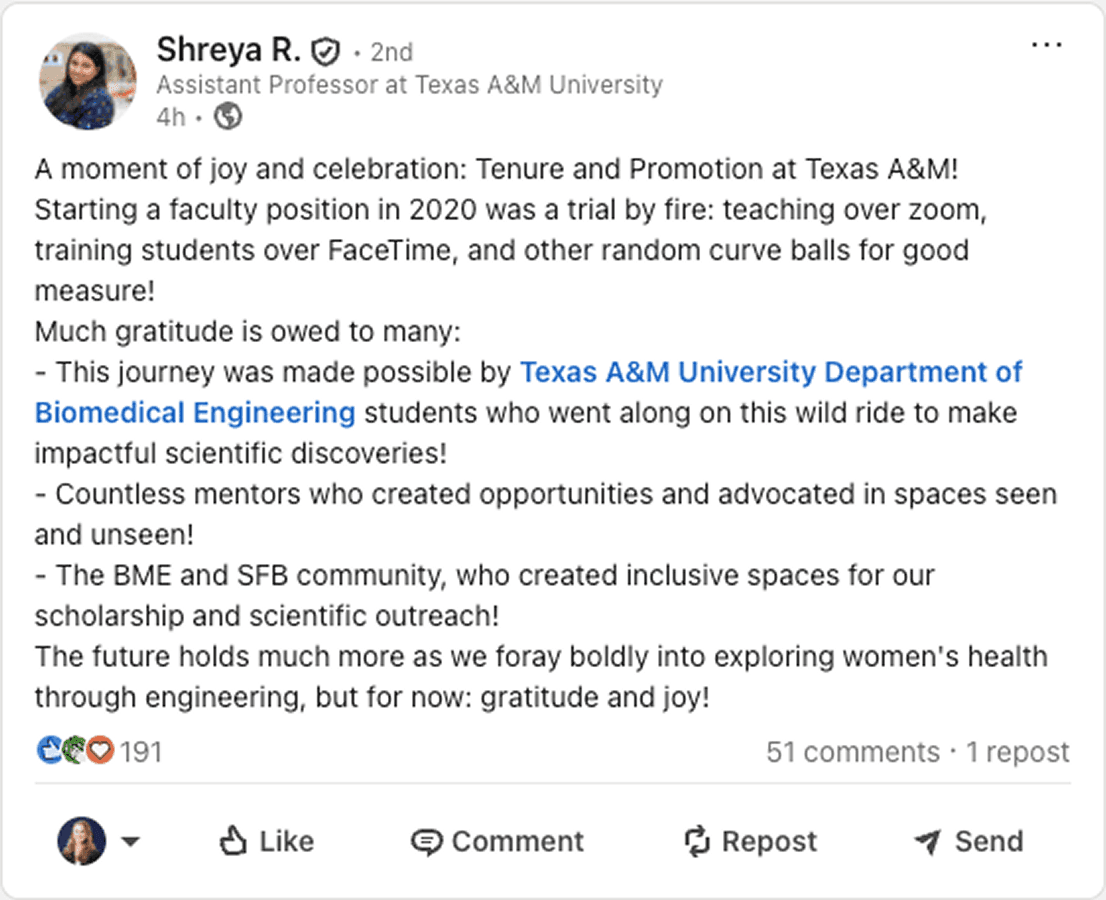
💡Why it works: This pairing re-establishes credibility (you show your track record) and warmth (you reveal a personal detail) while prompting comments on both posts—the strongest early indicator of extended reach in the new algorithm.
Week 2 — Package Your Biggest Lessons into “Pay-It-Forward” Wisdom
With the audience oriented shift to generously sharing expertise.
Post 3
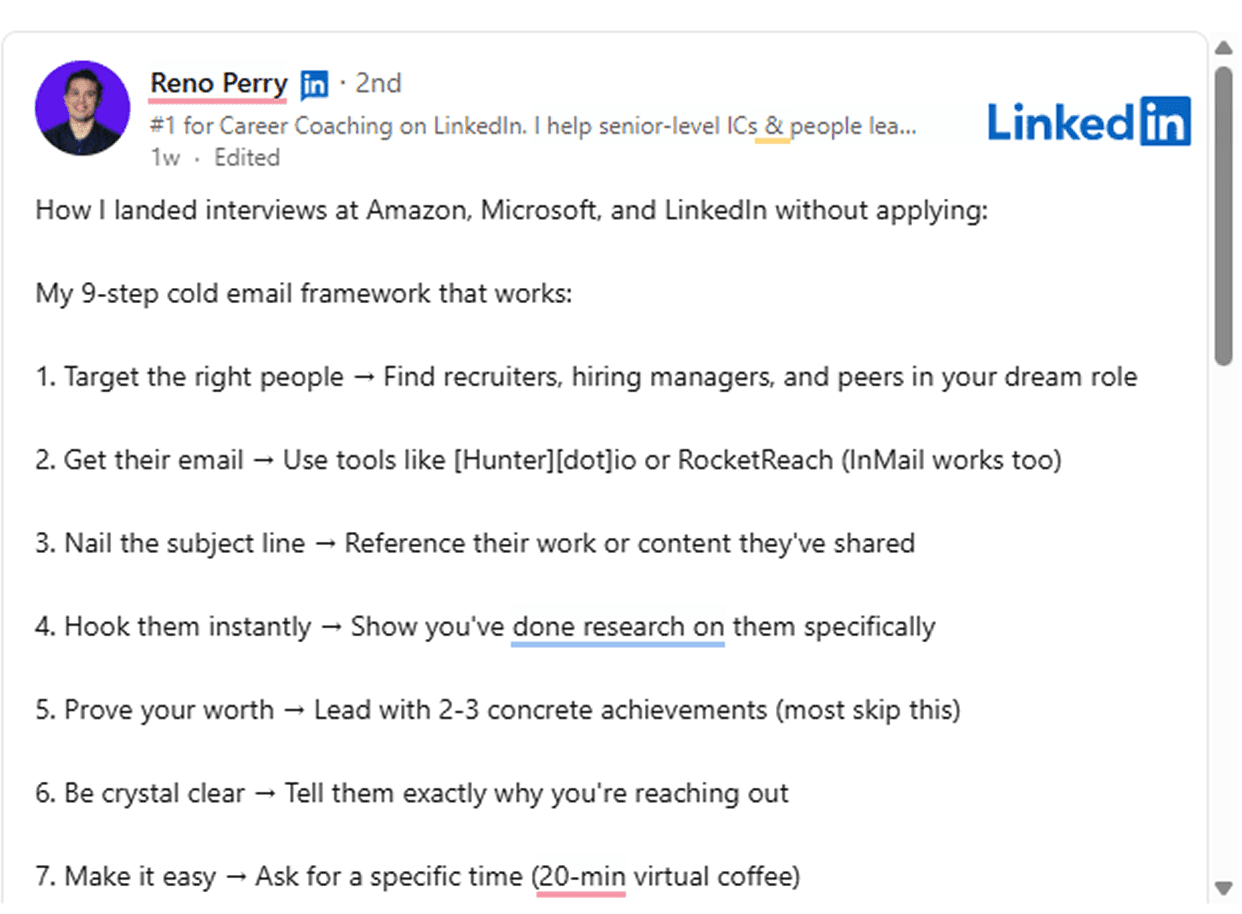
Distill the single most important lesson from your career into three to four crisp takeaways that anyone could apply today. Think “The rule of 80/20 saved my first product launch—here’s how.” Keep paragraphs short to minimize friction on mobile.
https://www.linkedin.com/embed/feed/update/urn:li:ugcPost:7340722888229994496?collapsed=1
Post 4
Write a reflective note addressed to your younger self—“Advice to the 22-year-old me who thought hard work was enough.” Speak directly to newcomers in your field, then invite readers to add the wisdom they wish they’d known. Replies that tag friends (“You need to read this, Julie!”) expand visibility into fresh networks without feeling forced.
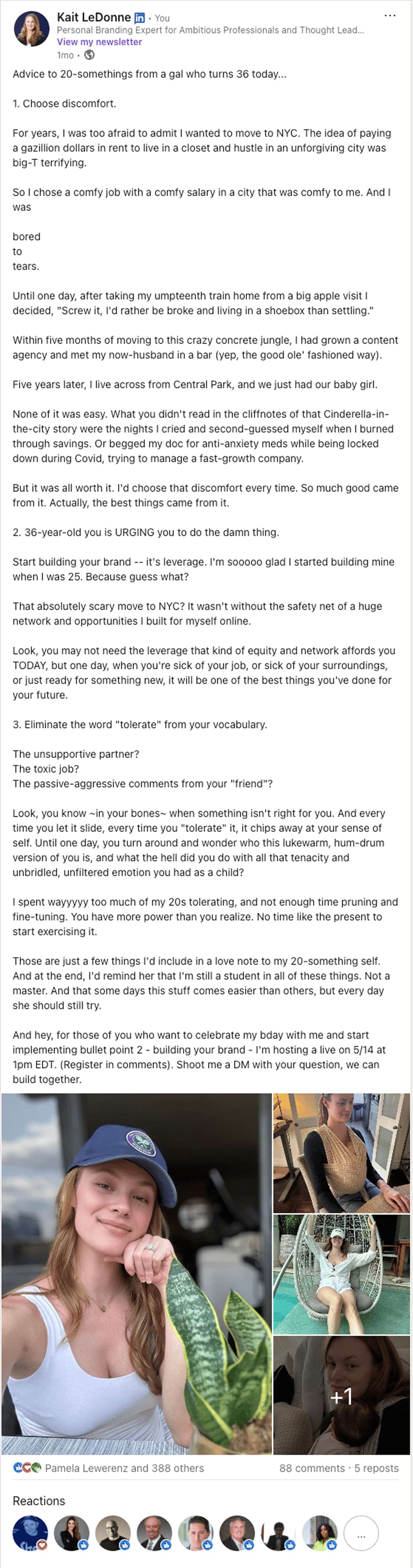
💡Why it works: Both posts elevate you from résumé reciter to mentor. When readers bookmark practical advice, it boosts the “save” metric, a signal LinkedIn now weighs more heavily than likes.
Week 3 — Showcase Resilience and Spark Debate
The midpoint of the month is a perfect time to introduce tension. Stories of overcoming setbacks outperform pure success stories because they deliver emotional stakes that keep readers glued to the end—exactly what dwell-time algorithms crave.
Post 5
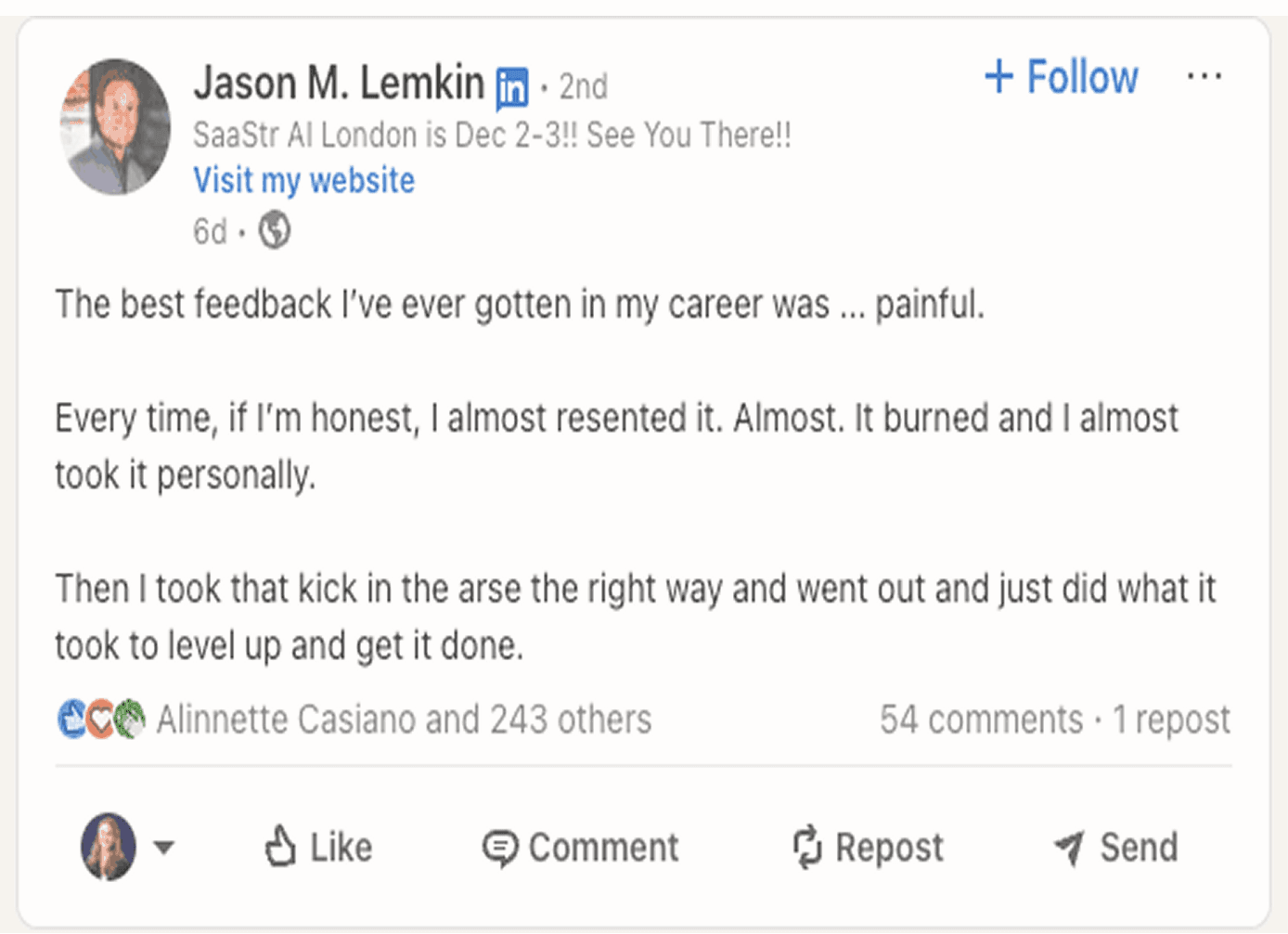
Tell a candid story about a professional obstacle you conquered. Detail the moment of doubt, the turning point, and the specific change that created momentum.
Post 6
Present a scenario with four strategic options (try a poll) and ask your network which route they would choose. For example: “If you had to grow revenue by 30 percent in six months, would you A) double prices, B) introduce a freemium tier, C) expand into a new market, or D) seek partnerships?”
Tally votes in real time and reply to early comments quickly; internal experiments show posts that gather seven or more comments in the first hour nearly double their median impressions.
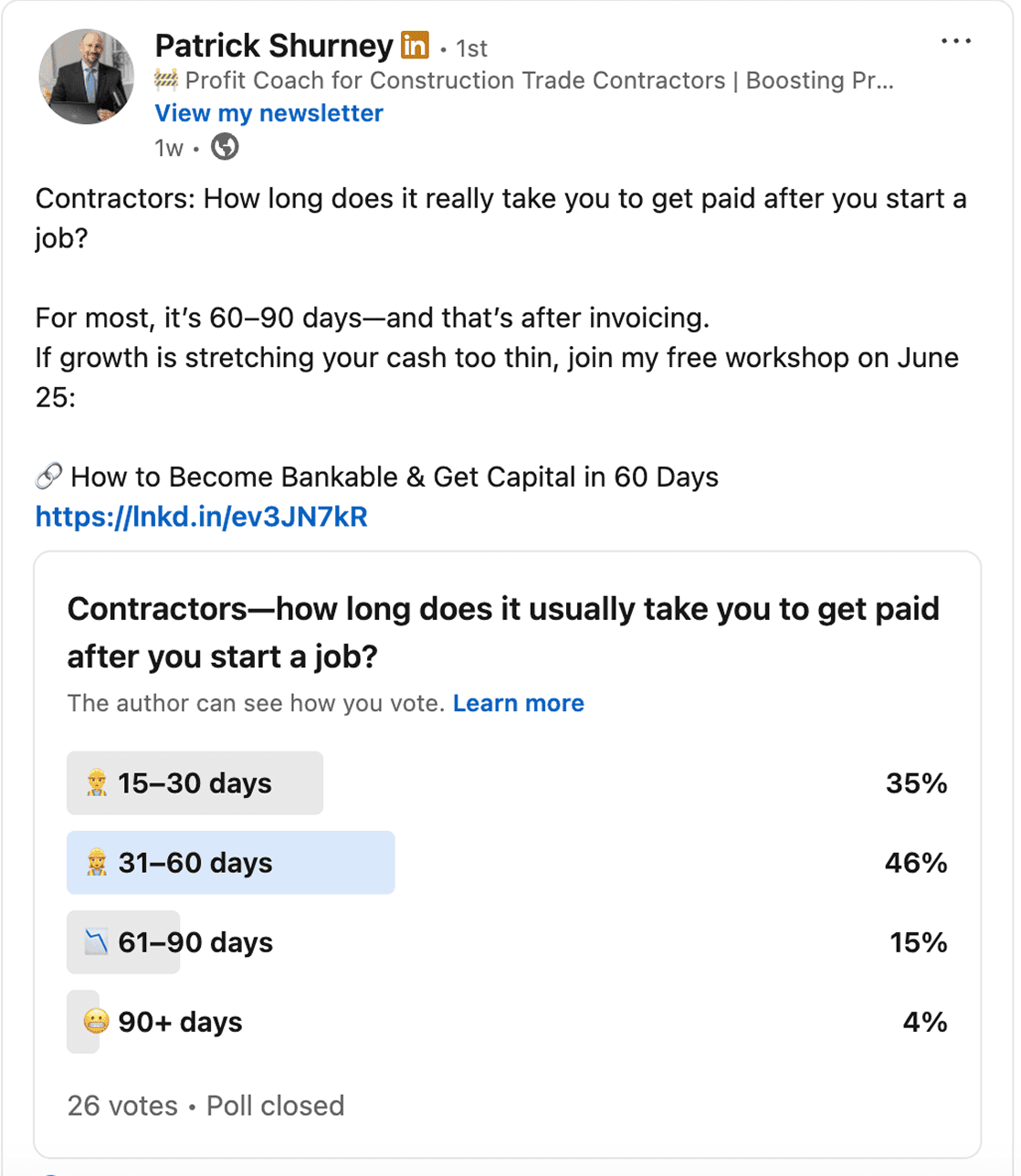
💡Why it works: Vulnerability followed by crowdsourced problem-solving turns passive scrollers into active participants, satisfying the algorithm’s push toward conversation depth.
Week 4 — Teach and Reflect to Cement Authority
Finish the schedule by shifting into pure value and thoughtful hindsight—two angles that cultivate trust and prime the audience for whatever you share next quarter.
Post 7
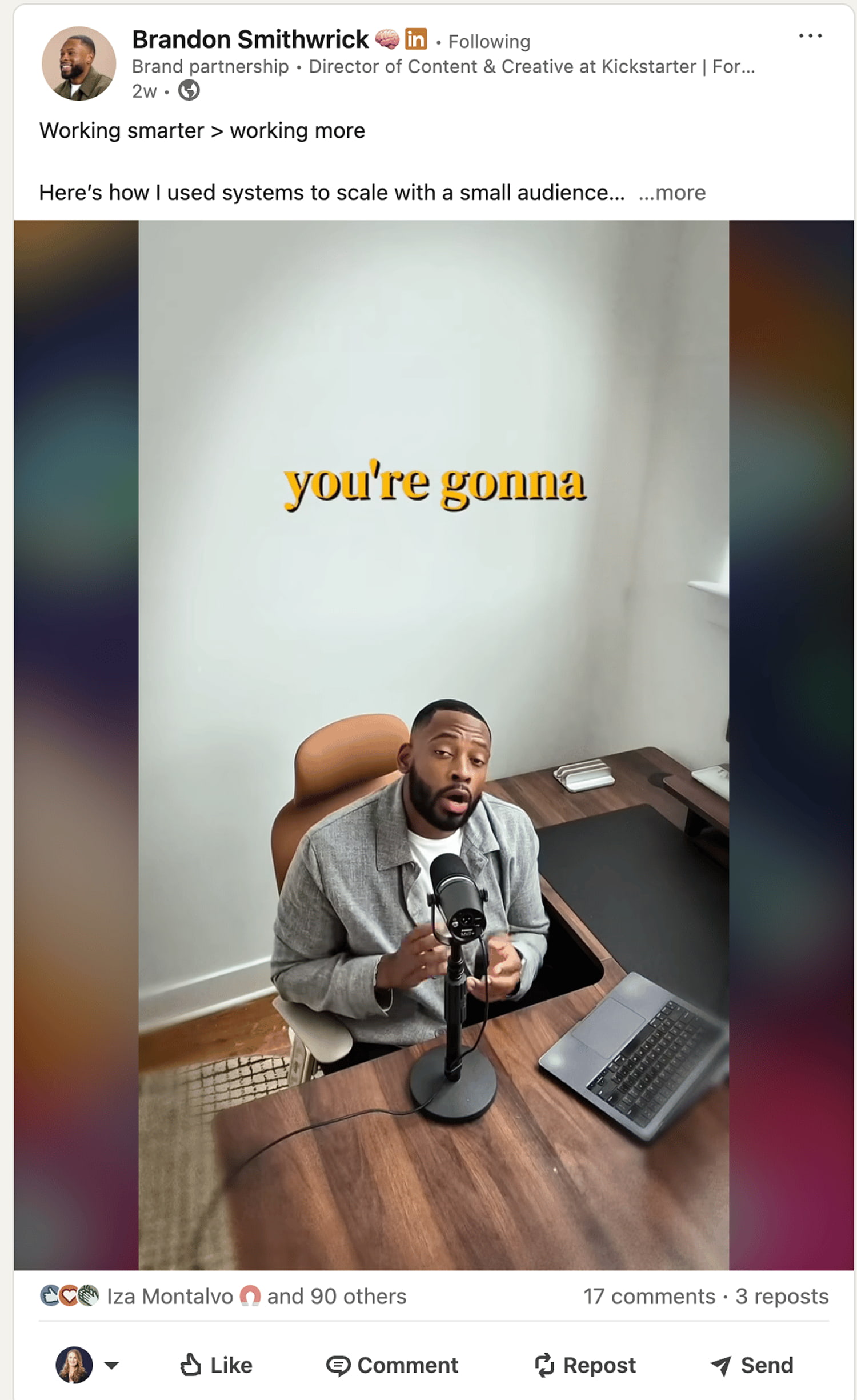
Offer a simple how-to in the “how we” or “how I” frame that solves a pressing industry pain point in three actionable steps. Think “How we reduced onboarding time from 30 days to 10: the process my team implemented last quarter.” Provide enough clarity to be useful, but leave room for follow-up discussion in the comments.
Post 8
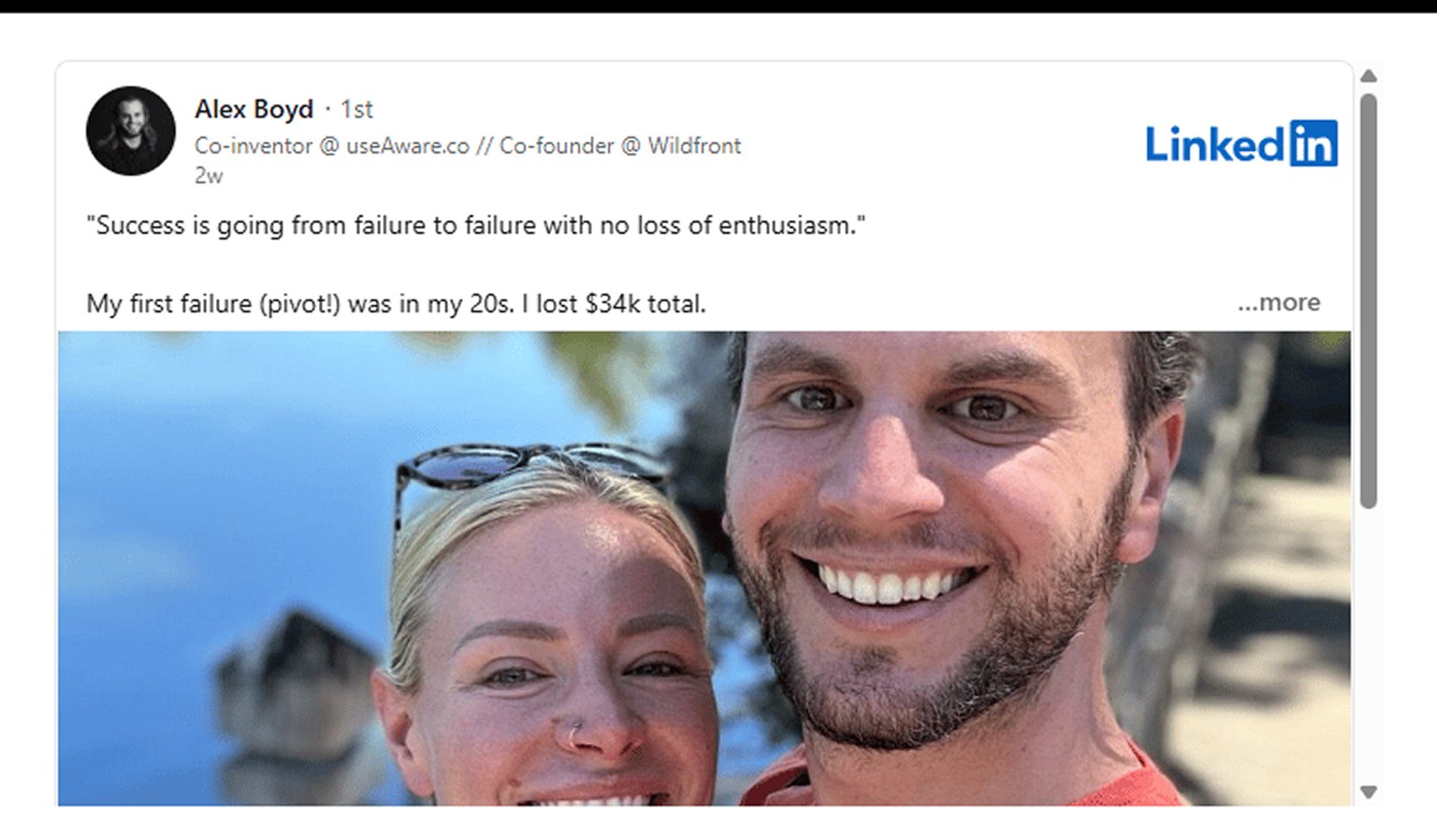
List three mistakes you made this year and the lessons they inspired. Frame each mistake with a headline (“Assuming silence meant alignment”) and a short reflection.
https://www.linkedin.com/embed/feed/update/urn:li:share:7336429103614488577?collapsed=1
Why it works: Educational content positions you as a practitioner, while honest self-assessment deepens relatability. Together, they reinforce both halves of LinkedIn’s current quality filter: demonstrable knowledge and authentic voice.
Measuring Success Without Losing Your Mind
Focus on three metrics:
Impressions – top-of-funnel visibility.
Engagement rate – proof your ideas resonate. The platform-wide average hovered around 2.8 percent in early 2025 (columncontent.com), so anything higher signals differentiation.
Profile views – buying intent. When someone clicks your name, they’re vetting you.
Check numbers no more than once per week to avoid decision fatigue. If engagement on one post type lags, iterate on headlines and opening lines before overhauling the concept. Consistency beats perfection, especially when you’re part of the one percent who actually show up.